Packing blessing characters during the New Year is one of the important customs in my country\’s traditional New Year culture. However, there are different opinions on the origin, meaning, method, time and precautions of pasting the word \”福\”, and there is no systematic analysis and research. In view of this, the editor will discuss one by one from the following five aspects.

1. When did the Chinese New Year stickers with blessing characters originate?
As for the origin of the word \”福\”, there are currently three popular theories.
The first is the \”Southern Song Dynasty Theory\”, which believes that the custom of posting blessing characters during the New Year began in the Southern Song Dynasty. The main basis is a passage recorded by Wu Zimu in the Song Dynasty in \”Meng Liang Lu\”: \”Every family of scholars and common people, no matter how big or small, sweeps the door, removes dust, cleans the courtyard, changes the door god, hangs the clock and kui, nails the peach charms, and puts up spring decorations.\” The second is the \”Ming Dynasty Theory\”, which believes that the kindness of Empress Ma during the New Year began, and a combination of circumstances contributed to the folk custom of blessing.
The third is the \”Qing Dynasty theory\”, which believes that the custom of posting blessing characters on New Year\’s Eve is the arty style of Empress Dowager Cixi, who unintentionally promoted the custom of posting blessings.
However, none of the above statements are correct.
The \”Southern Song Dynasty theory\” uses a description in \”Meng Liang Lu\” as a basis, but the mistake is that it is too simple.
The \”Ming Dynasty Theory\” relied on the folk tale of Queen Ma, but it was too credulous.
The \”Qing Dynasty theory\” based on Cixi\’s arty style is even less credible.
In fact, the custom of posting blessing characters during the New Year should have started in the Western Zhou Dynasty. There are three reasons:
The first is from the origin of the word \”福\”. The word \”福\” originated from the oracle bone inscriptions of the Shang Dynasty. The oracle bone inscriptions are the earliest existing characters in my country and have a history of nearly 3,700 years. Judging from the structure of the character \”福\” in oracle bone inscriptions, the upper left half of it is the character \”酉\”, which means a container for holding wine. The lower left half is two \”hands\” (again), indicating that both hands are holding wine bottles. The right half of it is the word \”shi\”, which means sacrifice. The whole word means holding a bottle of wine in both hands to show sacrifice. Therefore, the interpretation of the word \”福\” in \”Shuowen Jiezi\” is: \”Youye\”. \”You\” means blessing.
It can be seen that the word \”福\” not only originated in the Western Zhou Dynasty, but its meaning of praying for blessings is also very clear.
The second is from the use of the word \”福\”. According to the existing archaeological data, the word \”福\” at that time was widely inscribed on turtlesOn armor and animal bones. This shows that people at that time had begun to use the word \”福\” to pray for blessings.
The third is from the description in \”The Romance of the Gods\”. When Jiang Ziya became a god, he gave his wife the title of \”Poor God\” and told her that \”she cannot go to any blessed place.\” After this incident spread, people began to paste the word \”福\” on their doors to avoid the arrival of the \”god of poverty\”.
Although this story is a legend, people still retain the practice of posting \”poor blessings\” to this day. This means that in order to avoid debts during the Chinese New Year, people put the word \”福\” on the door during the New Year. When a debt collector sees the word \”福\” on the door, he will leave knowingly. Because according to folk customs, posting blessings means celebrating the New Year. Even if others are in debt, people should have a safe New Year.
Therefore, from the analysis of the above three aspects, it can be seen that the custom of posting blessing characters during the New Year should originate from the Western Zhou Dynasty.
2. What are the meanings of pasting the word \”福\”?
Generally speaking, posting the character \”福\” during the Chinese New Year expresses people\’s yearning for a happy life, but the different locations have slightly different meanings.
1. Blessings are posted on the door, which means opening the door to welcome blessings.
2. Blessings in the living room means good luck.
3. Blessing the kitchen means attracting wealth and blessing.
4. Putting blessings on the windows means looking up to see blessings.
5. Blessings are posted on the toilet, which means suppressing evil and removing filth.
3. How to paste the word \”福\”?
Posting blessings means praying for blessings. Therefore, posting blessings may seem simple, but it contains rich cultural connotations and should not be underestimated. According to folkloristsIn my opinion, there are three main ways to post the word \”福\”.
First of all, the word \”Fu\” must be posted directly on the door of the home, the living room and kitchen, the center of the store, the lobby of the hotel and other solemn places.
The door represents good luck, the living room represents welcoming good fortune, the kitchen represents receiving good fortune, and the store and lobby represent attracting wealth. They are all solemn and serious places, related to future prosperity. Therefore, the characters \”福\” in these places must be posted correctly. If it is reversed, it is not only unsightly, but also affects people\’s emotions.
Secondly, on indoor doors, interior walls of stores, and interior rooms of hotels, the character \”福\” can be posted upright or backwards. But the main thing is to stick to it.
These places are relatively private, and everyone can act according to their inner thoughts. But in general, it should be mainly applied upright and not all backwards.
Finally, the word \”Fu\” must be posted upside down on refrigerators, cabinets, rice vats, toilets, trash cans and other places where things need to be poured out.
Because these places are meant to pour things out, so in order to avoid taboos, the upside-down image of the word \”福\” is specially posted, so that the positive and negative can be offset and the blessing and wealth can always be kept at home.
4. When is the best time to post the word \”福\”?
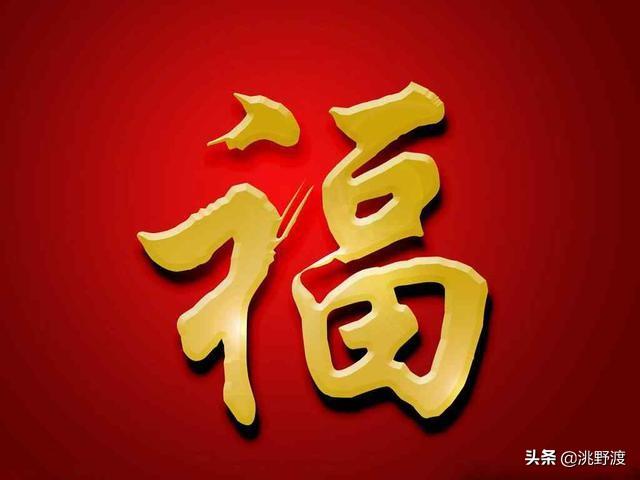
According to tradition, the time for pasting blessing characters is generally completed from the 24th of the twelfth lunar month to the morning of New Year\’s Eve.
In the south, the 24th day of the twelfth lunar month is the off year. As the folk proverb goes, \”After twenty-four, long-term workers will not take care of things.\” This means that after the Little New Year, people have to go back to busy with New Year matters, who will help you with things!
It is also said: \”On the twenty-fourth day of the twelfth lunar month, every family writes big characters.\” This means that starting from the Little New Year\’s Day, people began to write Spring Festival couplets, write the word \”blessing\”, and paste Spring Festival couplets and the word \”blessing\”. Therefore, posting blessing characters every New Year starts from the 24th day of the Lunar New Year.
So, when will it end? According to the opinion of folklorists, the annual blessing time should be completed before 12 o\’clock in the morning on New Year\’s Eve at the latest.
The reason is simply that New Year’s Eve is the last day of the lunar calendar that year, and only the morning has the strongest yang energy, which is suitable for praying. As described in the poem \”Yuan Ri\” by Wang Anshi of the Song Dynasty:
\”The sound of firecrackers marks the end of the year, and the spring breeze brings warmth to Tusu.
Thousands of households, on the first day of the lunar month, always Replace old talisman with new peach.\”
It means: With the sound of firecrackers, a year has passed. In the warmth of the spring breeze, the sun is shining on thousands of households. People drink Tusu wine and take off the old peach charms on the doors. Replace with new peach charms. It means that people have begun to put up Spring Festival couplets and the words \”blessing\” in preparation for the New Year.
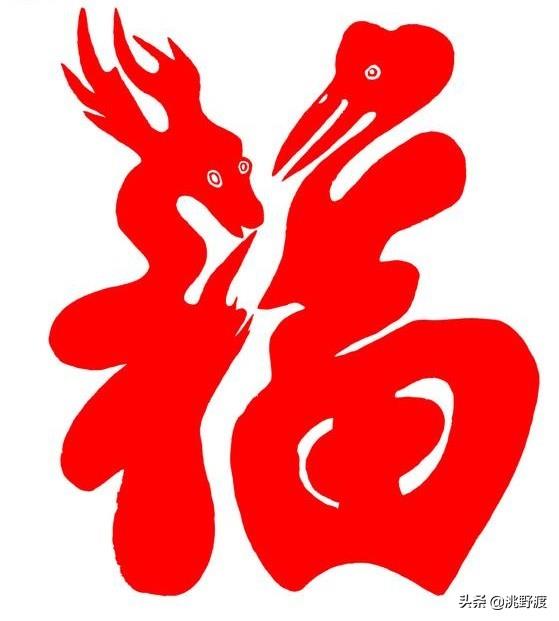
5. What are the precautions for pasting blessing characters?
According to \”Folk Customs\”, the following points should be paid attention to when posting blessing characters during the New Year.
1. Clean and hygienic before applying. Where there are stains, the stains should be removed first to prevent them from falling off if they are not firmly adhered.
2. Do not paste the old characters \”福\”, let alone the damaged characters.
3. The process of pasting is from outside to inside. Stick it on the door first, then the living room, and then inside the house.
4. When posting the word \”Fu\” in the bedroom, it should not be facing the bedside.
5. Pay attention to the reasonable layout. Don\’t post it biasedly, let alone crookedly. Be upright and beautiful.
In short, our country’s culture is broad and profound. The above is the editor\’s preliminary research and discussion on the origin, meaning, method, time and precautions of posting blessing characters during the New Year. Due to different regions, there are inevitably differences in local customs. If there is anything inappropriate in the article, please leave a message to discuss it.
本站内容及图片来自网络,版权归原作者所有,内容仅供读者参考,不承担相关法律责任,如有侵犯请联系我们:609448834